Image - 2026-09-24 04:35
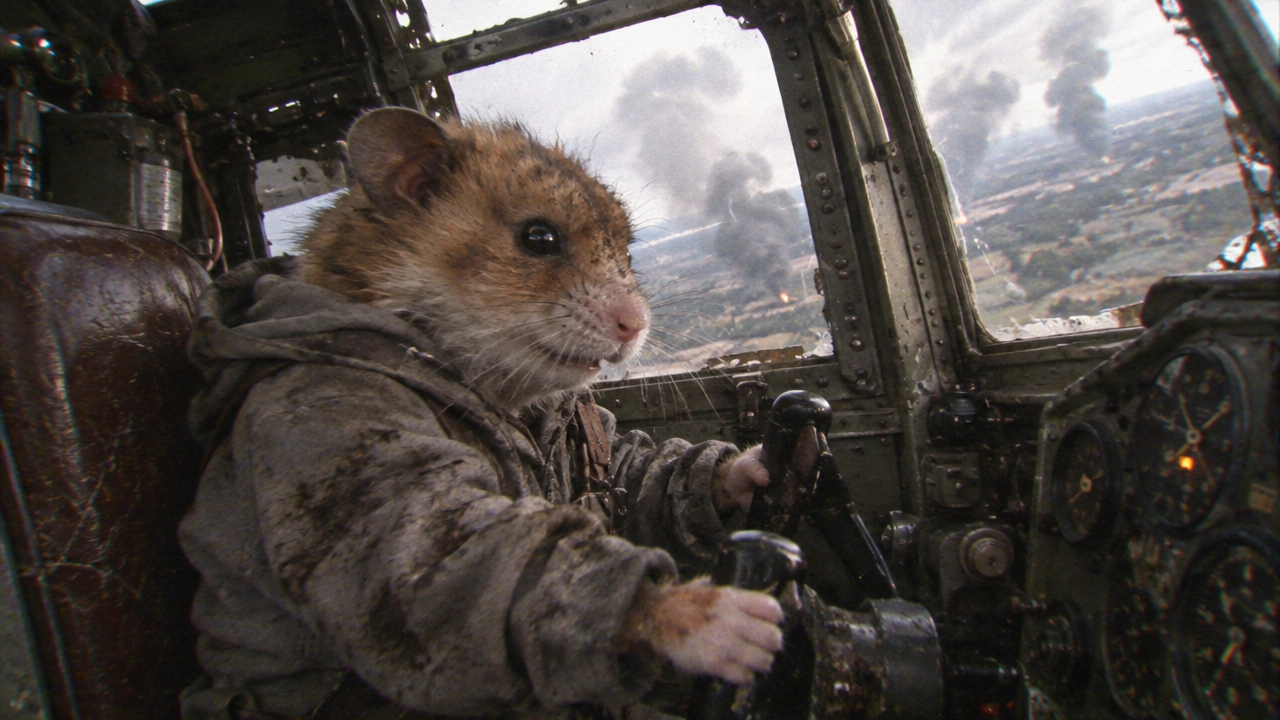
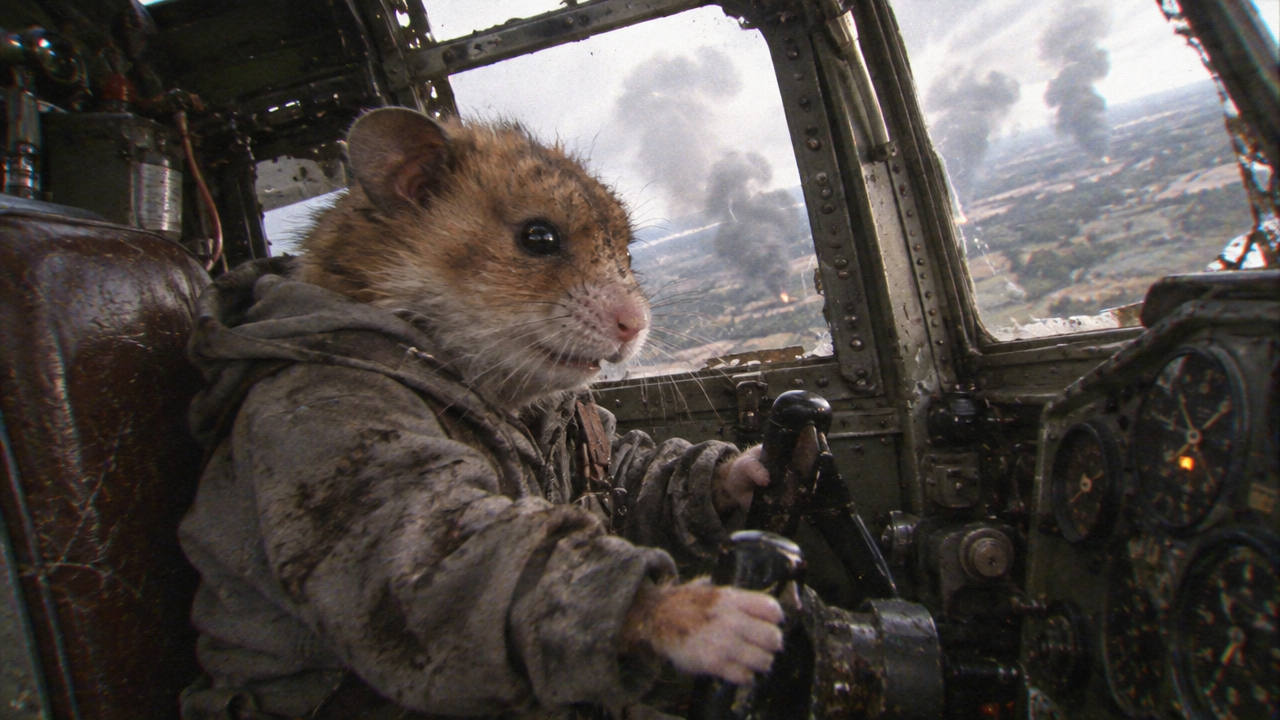
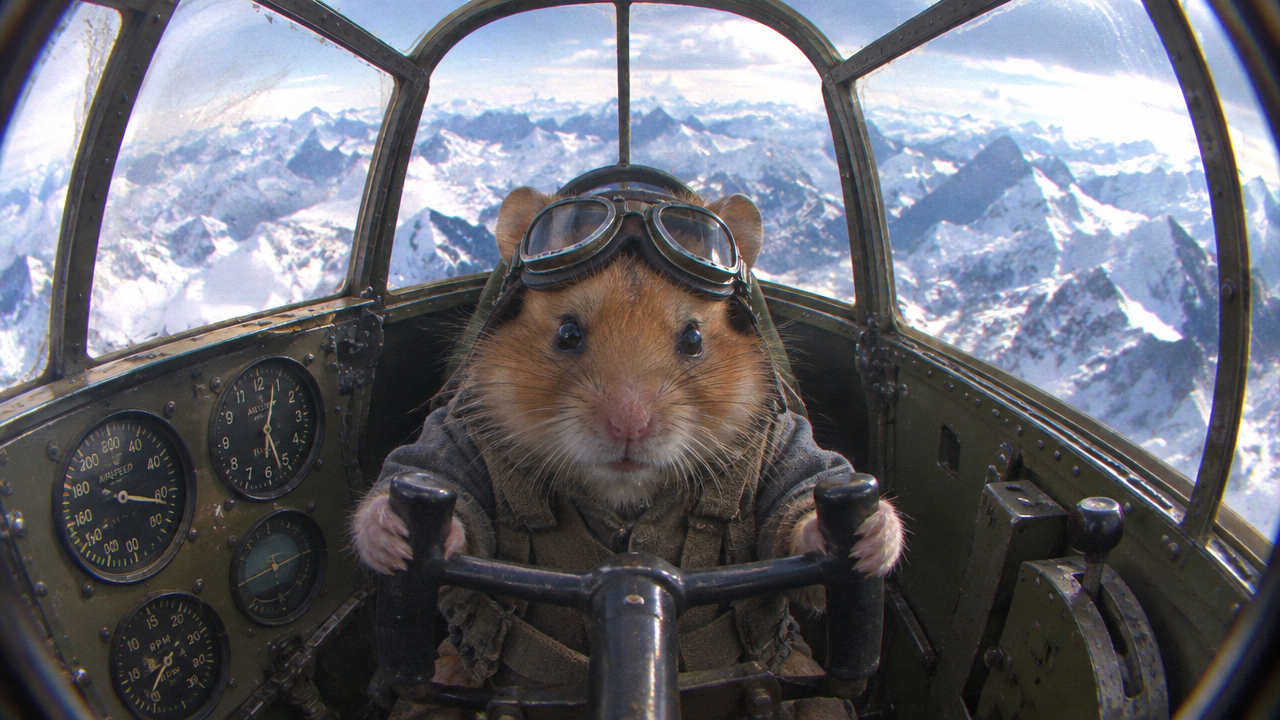
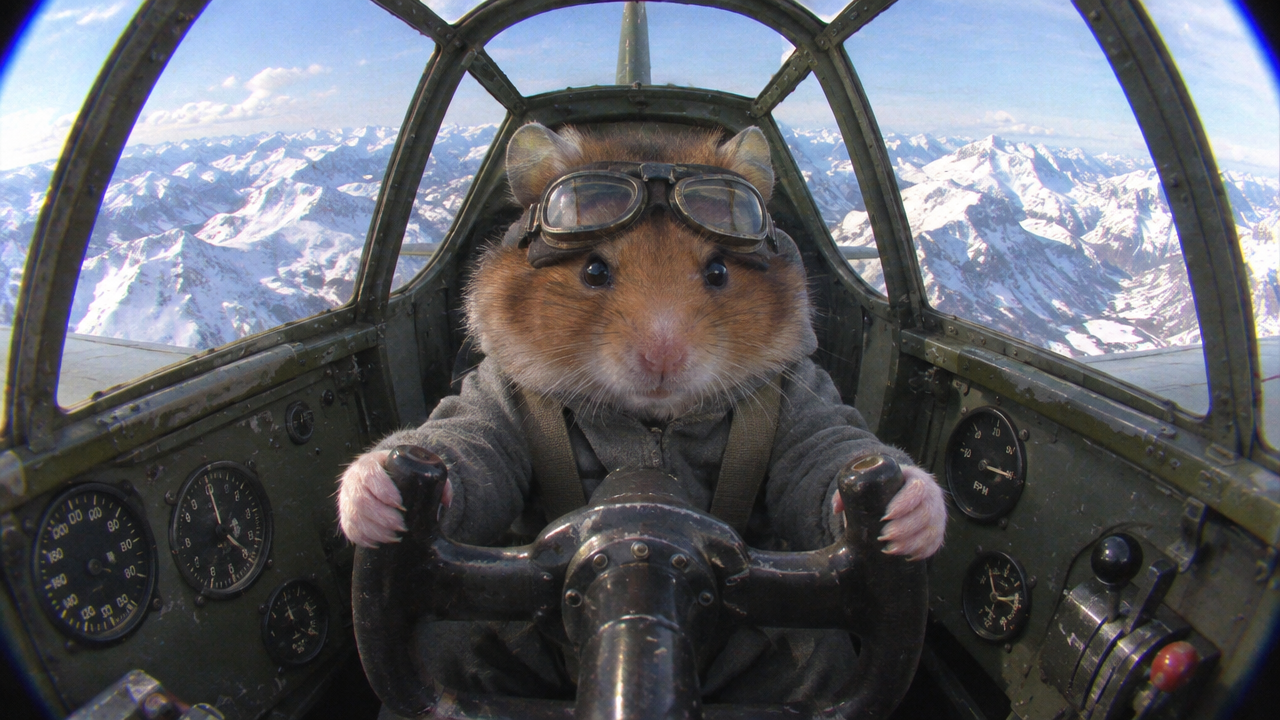
Use the attached reference image as the exact character reference. A photorealistic anthropomorphic hamster based on the reference image, preserving the same hamster's appearance, facial structure, fur pattern, proportions, large glossy black eyes, round ears, pink nose, short muzzle and recognizable overall character design. The hamster is flying an old military aircraft during World War II, seen from INSIDE the cramped cockpit. He is sitting in the pilot's seat and desperately trying to keep the damaged aircraft in the air. His small paws are gripping the worn aircraft controls. His posture and expression communicate extreme exhaustion, concentration and determination — he is flying the aircraft with the last of his strength. The hamster is visibly dirty and exhausted after prolonged combat conditions: dusty and slightly matted fur, small traces of soot and oil on the fur, dirt around the paws and clothing, slightly disheveled whiskers, tired but still alert eyes. No blood, no gore, no graphic wounds. He wears a worn, dirty, oversized gray military-style hoodie inspired by the reference clothing, heavily stained with dust, grease and soot, with realistic fabric wrinkles and wear. The clothing looks physically used rather than stylized or fashionable. Preserve the general silhouette of the original outfit. The aircraft is a genuinely old WWII-era military aircraft interior: cramped metal cockpit, riveted aluminum panels, scratched and oxidized metal, exposed wiring, mechanical gauges, analog instruments, old switches, worn leather pilot seat, aged control column, cables and pipes, chipped paint, dust, grease and accumulated grime. Everything should feel physically authentic, old, functional and heavily used. Through the cockpit windows, a chaotic wartime sky is visible: thick clouds, distant smoke trails and a hazy battlefield far below. The aircraft is flying at an unstable angle, slightly tilted, suggesting that the plane is damaged and struggling to maintain altitude. Subtle atmospheric haze and vibration reinforce the feeling that the aircraft is barely holding together. The composition should feel like a forgotten piece of real amateur footage accidentally recorded inside the aircraft in the 1990s, NOT like a modern Hollywood war movie. CAMERA: 1990s Hi8 / Video8 consumer camcorder footage, real analog consumer camcorder optics, small CCD sensor, compact built-in optical zoom, handheld camera positioned inside the cockpit, camera operator sitting or crouching behind and slightly to the side of the hamster, imperfect handheld framing, slight unintentional camera shake, subtle motion blur from handheld movement, deep depth of field, soft but relatively detailed image, slightly soft digital-era consumer optics, modest electronic sharpening, organic analog video noise, subtle chroma noise, mild color bleeding, imperfect color separation, soft highlight blooming, slight exposure instability, subtle white-balance imperfections, gentle edge softness, moderate contrast, slightly faded colors, slightly warm overall color response, realistic tape-era exposure, subtle focus imperfections, minor lens imperfections, authentic 1990s home-video character, tactile analog recording texture, natural analog image degradation. The image must look as though the scene was physically captured by a real 1990s Hi8/Video8 camcorder, not digitally rendered with a retro filter. REALISM: photographic realism, real physical materials, realistic hamster fur, individual wet and dirty hairs, natural whiskers, realistic eyes with natural reflections, physically accurate metal surfaces, realistic cockpit construction, natural imperfections, credible practical lighting, natural shadows, real-world exposure, no fantasy aesthetics, no illustration, no cartoon, no CGI appearance, no 3D-rendered look. LIGHTING: natural dim daylight entering through the cockpit windows, soft overcast wartime daylight, weak warm practical illumination from old cockpit instruments, subtle reflections on scratched metal, uneven exposure caused by the bright sky outside and dark cockpit interior, realistic low-light consumer-camera behavior, slightly blown highlights around the windows, deep but still readable cockpit shadows. FRAMING: 16:9 horizontal composition, medium-wide interior cockpit shot, hamster clearly visible from approximately the waist up, aircraft controls and cockpit instruments visible around him, cockpit canopy framing the composition, some of the exterior sky visible through the windows, slightly imperfect handheld composition, not perfectly centered, not symmetrical, documentary / accidental home-video framing. The scene should feel tense, exhausted and strangely authentic — like someone found an old Hi8 cassette containing impossible footage of a hamster desperately piloting a damaged WWII aircraft. IMPORTANT: The hamster must remain anatomically recognizable as the same hamster from the reference image. Do not turn him into a human. Do not replace him with a generic rodent. Keep realistic hamster anatomy, fur, ears, paws, whiskers and face. Do not make him cute, cartoonish or anthropomorphic in a Disney/Pixar style. His behavior can be human-like, but his physical appearance remains a real hamster. NO MODERN ELEMENTS. NO MODERN AIRCRAFT. NO MODERN CAMERAS. NO DIGITAL CINEMATIC LOOK. NO HDR. NO ULTRA-SHARP DIGITAL DETAIL. NO PERFECT STABILIZATION. NO MODERN COLOR GRADING. NO CINEMATIC TEAL-AND-ORANGE. NO VFX-LOOKING SMOKE. NO CGI. NO 3D RENDER. NO ILLUSTRATION. NO ANIME. NO CARTOON. NO TEXT. NO LOGOS. NO LABELS. NO WATERMARKS. NO TIMESTAMPS. NO UI. NO TECHNICAL OVERLAYS. NO VISIBLE CAMERA.
Free to start · Generate videos and images with AI in seconds
More from this creator


More Gpt Image 2.5 images
См. все →