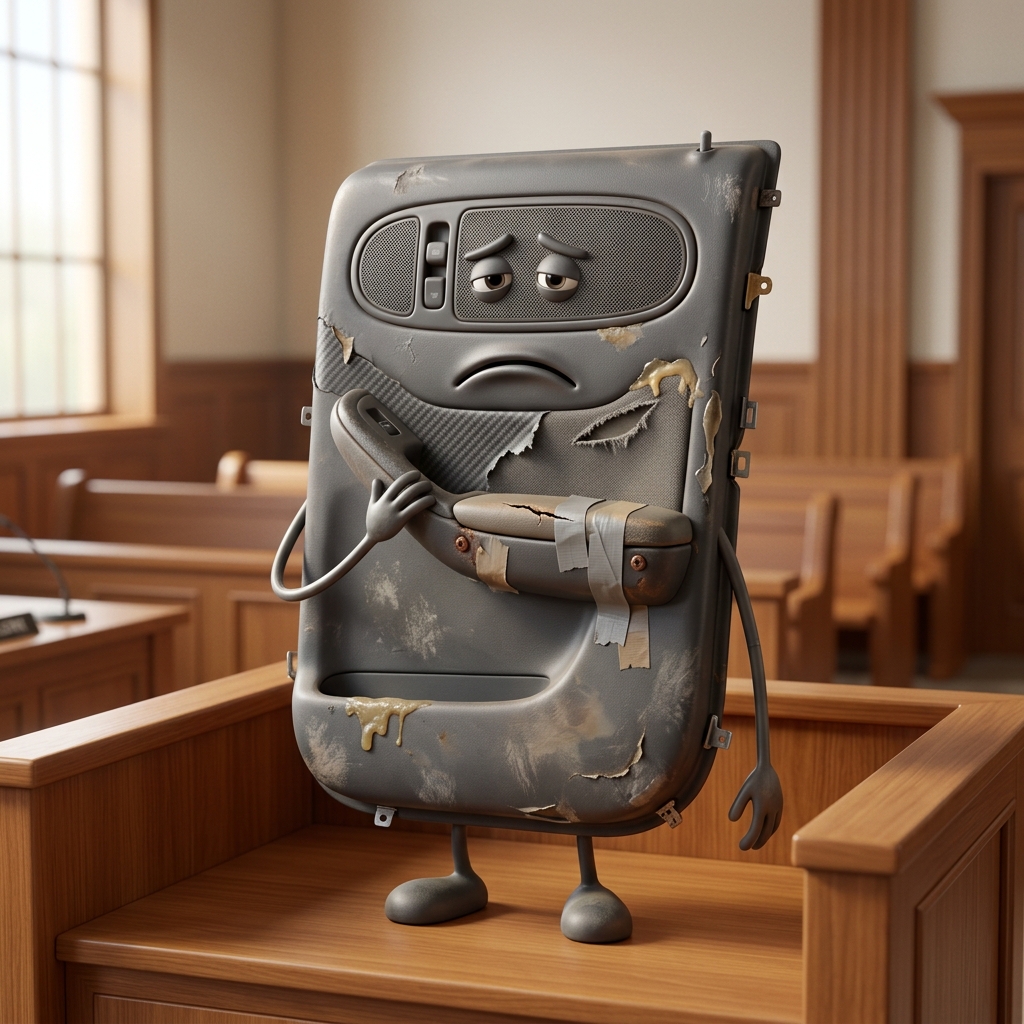
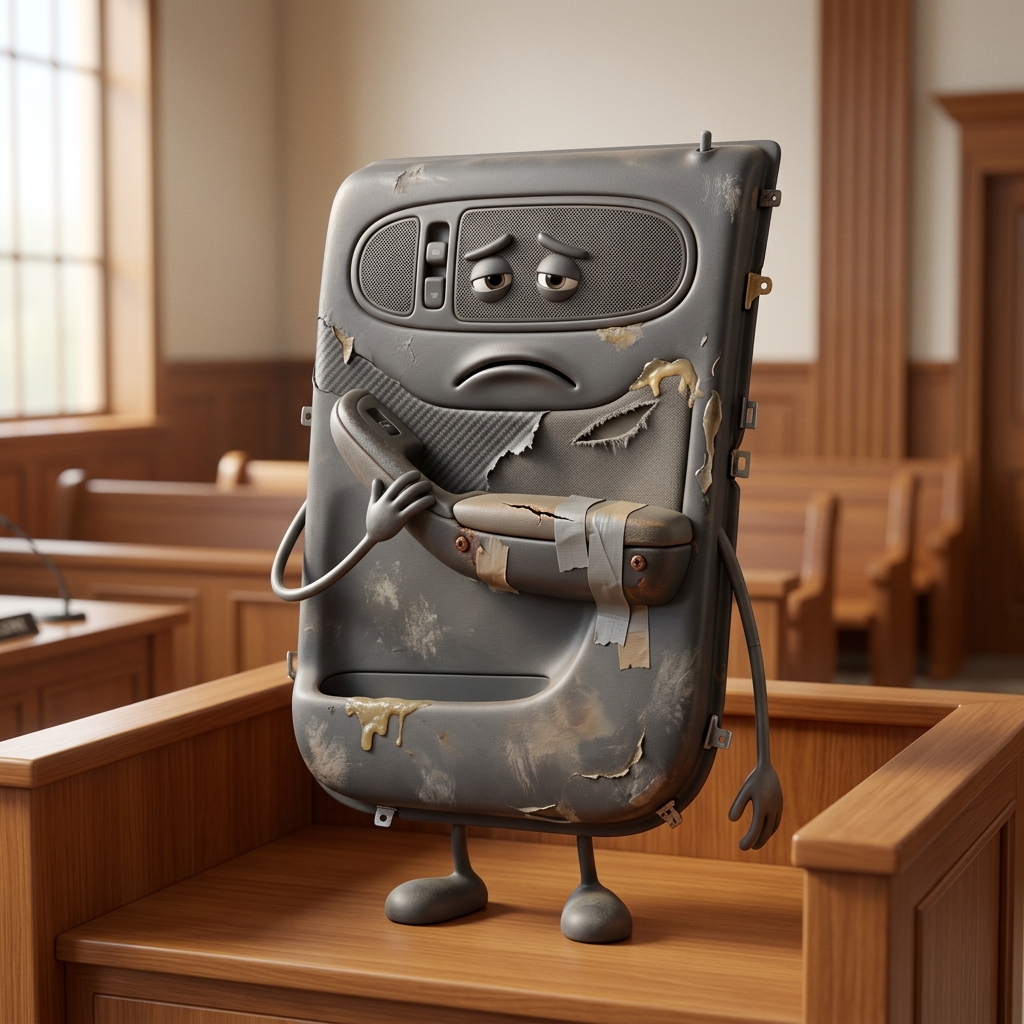





Art style: 3D Pixar. Full-length view, the entire figure visible from head to feet, standing upright, centered — a living car door card (interior door trim panel) given a sad little face and stubby limbs. Its body is a curved rectangular panel of faded grey-black molded plastic, once smooth but now scuffed and dull. A cracked armrest juts from its midsection, held together with mismatched tape and crooked screws. The speaker grille and window-switch cluster form a lopsided expression: two small dim button "eyes" and a downturned handle "mouth", conveying weary betrayal. Peeling fake-carbon trim, a torn fabric insert, and clumsy globs of dried glue mar its surface. Warped edges reveal loose clips. It stands on two short rubbery feet, slightly hunched, one thin arm rubbing the other. Background: a tidy courtroom witness stand, soft neutral daylight. ━━━━━━━━━━━━━━━━━━━━━━━━━━━━━━━━━━━━━━ FINAL STYLE ENFORCEMENT (this is the authoritative rendering directive — it overrides any style wording elsewhere in the prompt): Render this image in the following art style: Pixar-style 3D computer animation (Pixar / Disney feature-film look) — fully volumetric 3D rendering with rounded dimensional forms, soft subsurface-scattering skin, physically based materials, soft global illumination, warm cinematic key light, gentle depth of field, vibrant family-friendly colours. CRITICAL: EVERY element — characters, foliage, trees, animals, water, sky, props and the entire environment — must be rendered as polished 3D CGI with real depth and form. This is NOT flat 2D illustration, NOT a watercolour or storybook painting, NOT cel-shaded anime. Every surface, skin, fabric, material, and environmental element must be rendered in this idiom.
Free to start · Generate videos and images with AI in seconds